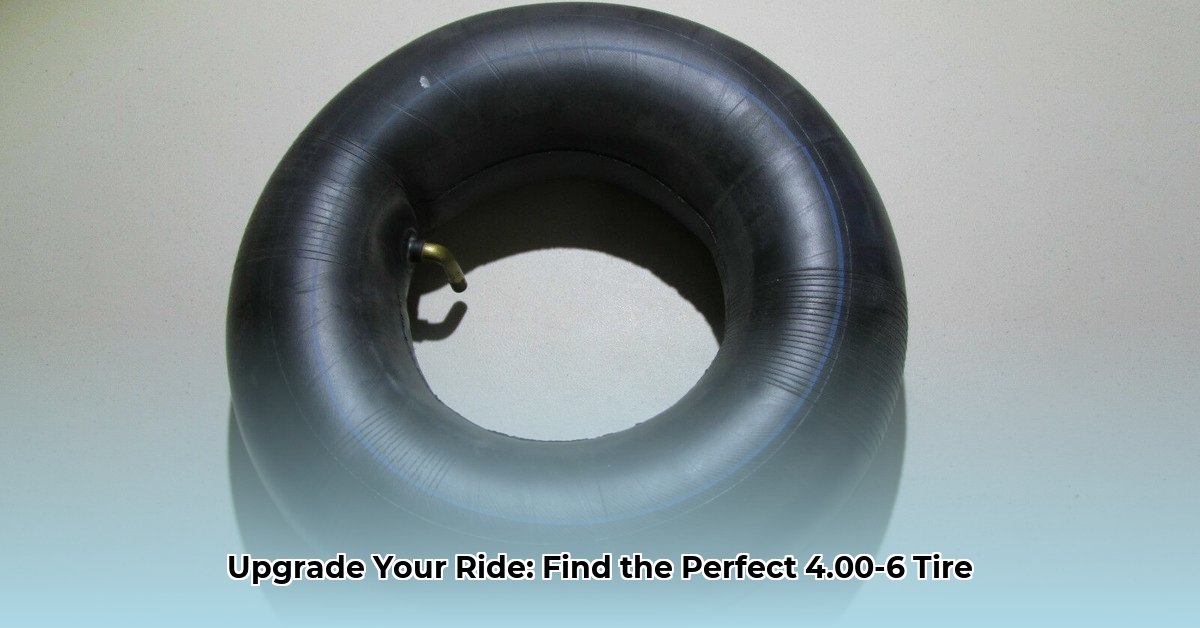
Finding the right 4.00-6 tire for your agricultural equipment can significantly impact its performance and longevity. This guide provides a comprehensive overview of selecting and using these tires effectively for wheelbarrows, small tractors, and other implements. We'll cover key features, compare available options, and offer a step-by-step process to help you make an informed decision.
Understanding Your Agricultural Needs: Matching Tire to Task
Before selecting a 4.00-6 tire, consider your specific needs. What types of loads will you be hauling? How rough is the terrain you'll be traversing? Are you primarily working on hard surfaces or soft, muddy ground? These factors will greatly influence your tire choice. For example, consistently hauling heavy loads requires a tire with a higher load capacity, while navigating muddy fields necessitates a tire with an aggressive tread pattern.
Key Features of a 4.00-6 Tire: A Closer Look
Several critical aspects determine a 4.00-6 tire's performance and lifespan.
Load Capacity: The Weight Factor
The load capacity, often expressed in pounds, indicates the maximum weight a tire can safely carry. Exceeding this limit can lead to tire failure and potential accidents. Most 4.00-6 tires handle at least 200 pounds, but always check the specifications to ensure it meets your needs. Have you ever considered the potential consequences of overloading a tire? A simple oversight can lead to costly repairs and safety risks.
Tread Pattern: Grip and Traction
The tread pattern significantly affects traction. Ribbed treads (parallel lines) excel on hard surfaces but struggle in mud. Aggressive treads (deep grooves and lugs) offer superior grip in soft conditions but may wear faster on hard surfaces. Which pattern suits your typical terrain better? This is a crucial decision affecting both performance and tire longevity.
Tire Construction: Durability and Strength
The tire's construction impacts its durability and resistance to punctures. Ply rating (e.g., 2PR, 4PR) indicates the number of rubber layers: a higher rating generally means greater durability and load capacity, but a potentially stiffer ride. A higher ply rating provides enhanced resistance to punctures and tears – an investment that pays off in the long run. Do you often encounter sharp rocks or debris in your work area? Then a higher ply rating is a wise investment.
Comparing 4.00-6 Tires: Making an Informed Choice
While comprehensive comparisons across all available 4.00-6 tires are difficult due to information availability, focus on these critical areas:
Load Capacity: Ensure this matches or exceeds the maximum weight your equipment will carry.
Tread Pattern: Select a pattern appropriate for your usual terrain (smooth for hard surfaces, aggressive for soft ground).
Price vs. Value: A slightly more expensive, higher-quality tire with superior construction and lifespan may ultimately be more economical. Investing in a durable tire can save you money and time in the long run, avoiding repeat purchases and downtime.
Remember to check customer reviews for real-world insights into a tire's performance and durability.
Step-by-Step Guide to Choosing Your 4.00-6 Tire
Assess Your Needs: Determine the typical loads and terrains you'll encounter. What are the heaviest loads and what surface conditions (hard packed, soft mud, gravel)?
Check Specifications: Validate load capacity, ply rating, and tread pattern against your needs.
Read Reviews: Explore user reviews for insights into real-world performance and durability. What issues have other users reported?
Compare Prices and Features: Evaluate the overall cost considering the tire's expected lifespan. Often, investing in a higher quality tire is more cost-effective than constantly replacing cheaper versions.
Purchase from a Reputable Source: Choose a retailer with positive feedback and a good return policy.
Pros and Cons of Different Tread Patterns
This table summarizes the advantages and disadvantages of different tread patterns:
| Tread Pattern | Pros | Cons |
|---|---|---|
| Ribbed Tread | Good for hard surfaces, longer lifespan, quieter ride | Poor traction in mud, gravel, or loose soil |
| Aggressive Tread | Excellent grip in mud, loose soil, and rough terrain; greater stability | Shorter lifespan compared to ribbed treads; noisier on hard surfaces |
Choosing the right 4.00-6 tire involves carefully considering your specific needs and priorities. Remember, the right tire ensures safe and efficient operation of your agricultural equipment for years to come.
⭐⭐⭐⭐☆ (4.8)
Download via Link 1
Download via Link 2
Last updated: Sunday, May 18, 2025